


Hey there! As a supplier of low bed semi trailers, I often get asked about all sorts of things related to these bad boys. One question that pops up quite a bit is, "What is the wind resistance of a low bed semi trailer?" Well, let's dive right in and break it down.
First off, wind resistance, also known as aerodynamic drag, is a force that opposes the motion of an object through the air. When it comes to low bed semi trailers, wind resistance can have a big impact on fuel efficiency, speed, and overall performance.
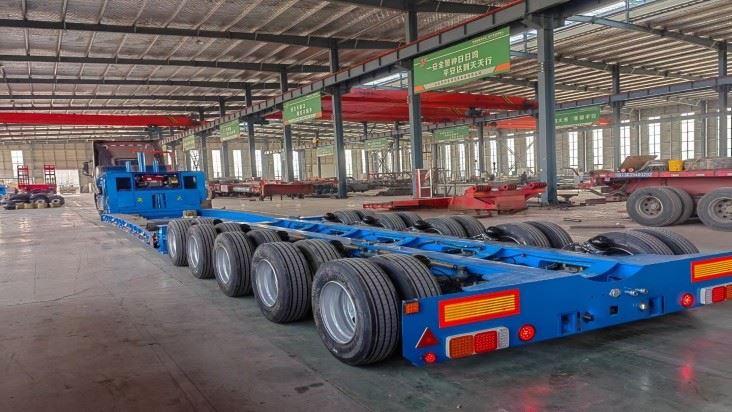
The wind resistance of a low bed semi trailer depends on several factors. One of the most important ones is the shape of the trailer. Low bed semi trailers typically have a relatively flat and wide design, which can create a lot of drag. Unlike some other types of trailers that are more streamlined, the flat surface of a low bed semi trailer acts like a big sail, catching the wind and slowing the vehicle down.
Another factor is the size of the trailer. Larger trailers generally have more surface area exposed to the wind, which means they'll experience more wind resistance. For example, a 4 Axle Low Bed Trailer is likely to have more wind resistance than a smaller 3 Axle Low Bed Trailer simply because it's bigger.
The load on the trailer also plays a role. If the load is not properly secured or is unevenly distributed, it can disrupt the airflow around the trailer and increase wind resistance. A well - loaded and balanced trailer will have a more predictable and efficient aerodynamic profile.
Now, let's talk about how wind resistance affects the performance of a low bed semi trailer. Higher wind resistance means that the tractor pulling the trailer has to work harder. This translates into increased fuel consumption. In today's world where fuel prices are constantly fluctuating, this can be a significant cost for trucking companies.

It also affects the speed of the vehicle. With more wind resistance, the trailer will have a harder time reaching and maintaining high speeds. This can be a problem when you're trying to meet tight delivery schedules.
So, what can be done to reduce the wind resistance of a low bed semi trailer? There are a few strategies. One option is to add aerodynamic accessories. For example, fairings can be installed on the sides and rear of the trailer. These fairings help to smooth out the airflow around the trailer, reducing drag.
Another approach is to optimize the loading of the trailer. Make sure the load is evenly distributed and as low as possible. This not only helps with wind resistance but also improves the stability of the trailer.
Some manufacturers are also experimenting with new materials and designs to make low bed semi trailers more aerodynamic. For instance, using lightweight and strong materials can reduce the overall weight of the trailer, which in turn can reduce the power needed to overcome wind resistance.
When it comes to our low bed semi trailers, we take wind resistance seriously. We offer a range of trailers, including the 60 Ton Low Bed Trailer, that are designed with aerodynamics in mind. Our engineering team is constantly working on improving the design of our trailers to minimize wind resistance and improve fuel efficiency.
We understand that every trucking company has different needs. Whether you're hauling heavy machinery or construction materials, we have a low bed semi trailer that's right for you. And we're not just about selling trailers; we're about providing solutions.
If you're in the market for a low bed semi trailer, we'd love to talk to you. Our team of experts can help you choose the right trailer for your specific requirements. We can also provide you with information on how to optimize the performance of your trailer, including reducing wind resistance.
Contact us today to start the conversation. We're here to help you get the most out of your low bed semi trailer. Whether you're a small - scale operator or a large - scale trucking company, we have the experience and the products to meet your needs.
References
- Aerodynamics in Heavy Vehicle Design, Journal of Transportation Engineering
- The Impact of Trailer Design on Fuel Efficiency, Trucking Research Institute


