


When it comes to the transportation industry, low bed semi trailers play a crucial role in hauling heavy and oversized loads. As a supplier of low bed semi trailers, I understand the importance of ensuring that these trailers meet all the legal requirements for registration. In this blog post, I will discuss the key legal requirements for registering a low bed semi trailer, which can help both our customers and those in the industry understand the process better.
1. Vehicle Identification Number (VIN)
The Vehicle Identification Number is a unique code assigned to every motor vehicle, including low bed semi trailers. It serves as the vehicle's fingerprint, containing information about the manufacturer, model, and serial number. In most countries, it is a legal requirement for a low bed semi trailer to have a valid VIN. The VIN must be clearly visible and permanently affixed to the trailer. This helps in tracking the trailer's history, including its origin, any previous accidents, and maintenance records. When registering a low bed semi trailer, the registration authority will use the VIN to verify the trailer's identity and ensure that it meets the necessary safety and manufacturing standards.
2. Weight and Dimension Limits
One of the most important legal aspects of registering a low bed semi trailer is adhering to weight and dimension limits. These limits vary from country to country and even between different states or provinces within a country. Exceeding the weight limit can not only cause damage to the roads but also pose a significant safety risk. For example, overloaded trailers may have longer braking distances and be more difficult to maneuver.
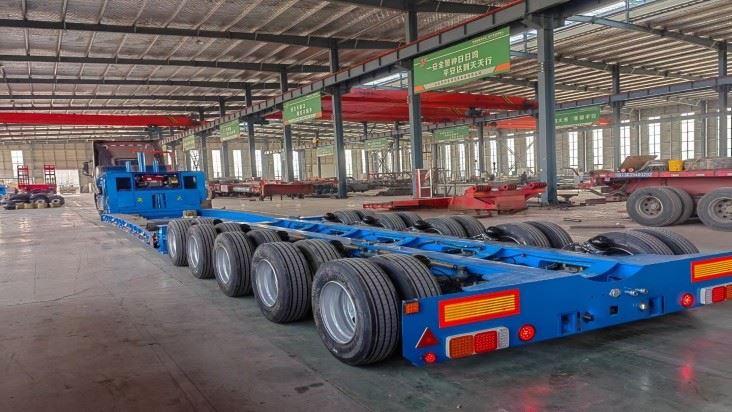

When it comes to dimensions, the length, width, and height of the low bed semi trailer must comply with the local regulations. Some areas may have restrictions on the maximum length of a trailer to ensure safe passage on roads and through tunnels. Similarly, width limits are in place to prevent trailers from obstructing traffic lanes. Our company offers a range of low bed semi trailers, such as the 60 Ton Low Bed Trailer, which are designed to meet various weight and dimension requirements.
3. Safety Equipment
Safety is a top priority when it comes to low bed semi trailers. To be eligible for registration, trailers must be equipped with the necessary safety features. This includes proper lighting systems, such as brake lights, turn signals, and reflectors. These lights ensure that the trailer is visible to other road users, especially during low-light conditions or at night.
In addition, trailers should have functioning brakes. The braking system must be capable of safely stopping the trailer and any load it is carrying. Some regions may also require trailers to have anti - lock braking systems (ABS) for enhanced safety. Other safety equipment may include rear guards to prevent vehicles from under - riding the trailer in case of a collision and tie - down points to secure the load properly. Our 4 Axle Low Bed Trailer and 6 Axle Low Bed Semi Trailer are equipped with high - quality safety features to meet these legal requirements.
4. Emission Standards
In many parts of the world, emission standards are becoming increasingly important, even for trailers. Although low bed semi trailers do not have engines themselves, if they are equipped with auxiliary power units (APUs) or other equipment that emits pollutants, they must comply with the local emission regulations. These regulations are in place to reduce air pollution and protect the environment.
5. Insurance Requirements
Before registering a low bed semi trailer, it is usually mandatory to have appropriate insurance coverage. Insurance provides financial protection in case of accidents, damage to the trailer, or injury to third parties. The type and amount of insurance required may vary depending on the use of the trailer and the local laws. For example, if the trailer is used for commercial purposes, the insurance requirements may be more stringent compared to a trailer used for personal use.
6. Documentation
To complete the registration process, a set of documentation is required. This typically includes proof of ownership, such as a bill of sale or a title certificate. The registration application form must be filled out accurately, providing details about the trailer, its owner, and its intended use. In some cases, a vehicle inspection report may also be necessary to confirm that the trailer meets all the legal requirements.
7. Compliance with International Regulations (if applicable)
If the low bed semi trailer is intended for international transportation, additional regulations may apply. For example, the European Union has its own set of standards for trailers used within its member states. These standards cover aspects such as safety, emissions, and dimensions. Trailers must be compliant with these regulations to be allowed to operate across borders.
Conclusion
Registering a low bed semi trailer involves meeting a variety of legal requirements, from VIN verification to compliance with safety, weight, and emission standards. As a supplier, we are committed to providing trailers that meet these requirements. Our team can assist customers in understanding the specific legal requirements in their area and ensuring that the trailers they purchase are ready for registration.
If you are interested in purchasing a low bed semi trailer and need more information about the legal requirements or our product range, please feel free to contact us. We are here to help you make the right choice and ensure a smooth registration process for your trailer.
References
- National Highway Traffic Safety Administration (NHTSA) regulations
- Local transportation department guidelines
- European Union trailer standards and regulations


