


As a supplier of low bed semi trailers, I've witnessed firsthand the importance of international standards in this industry. Low bed semi trailers are specialized vehicles designed to transport heavy and oversized loads, such as construction equipment, industrial machinery, and large vehicles. These trailers need to meet strict international standards to ensure safety, reliability, and compliance during transportation.
Structural Design Standards
One of the fundamental aspects of low bed semi trailers is their structural design. International standards typically specify the materials, dimensions, and load - bearing capacities of these trailers. For example, the frame of a low bed semi trailer is often made from high - strength steel to withstand heavy loads. The thickness of the steel plates used in the frame construction is carefully regulated to ensure the trailer can support the intended weight without deformation.
The overall dimensions of the trailer also play a crucial role. The length, width, and height of the low bed semi trailer are standardized to ensure compatibility with different transportation routes and loading facilities. For instance, in many countries, the maximum width of a low bed semi trailer is limited to around 2.55 meters to comply with road regulations. This standardization helps prevent over - width loads that could pose a safety hazard on the roads.
Regarding load - bearing capacity, international standards define the maximum weight that a low bed semi trailer can carry. This includes both the static load (the weight of the cargo at rest) and the dynamic load (the additional forces exerted on the trailer during movement). For example, a 4 Axle Low Bed Trailer may have a load - bearing capacity ranging from 30 to 80 tons, depending on its design and construction.
Axle and Suspension Standards
The axles and suspension systems of low bed semi trailers are critical components that directly affect the trailer's performance and safety. International standards govern the number, type, and configuration of axles on a trailer. The number of axles is usually determined by the load - bearing capacity of the trailer. For example, a 6 Axle Low Bed Semi Trailer is designed to carry heavier loads compared to a 4 - axle trailer.
Axles need to be made from high - quality materials and have the appropriate load - rating. They should be able to withstand the vertical, horizontal, and torsional forces exerted on them during transportation. The suspension system, which connects the axles to the trailer frame, also has strict standards. It should provide a smooth ride, reduce vibrations, and evenly distribute the load across the axles.

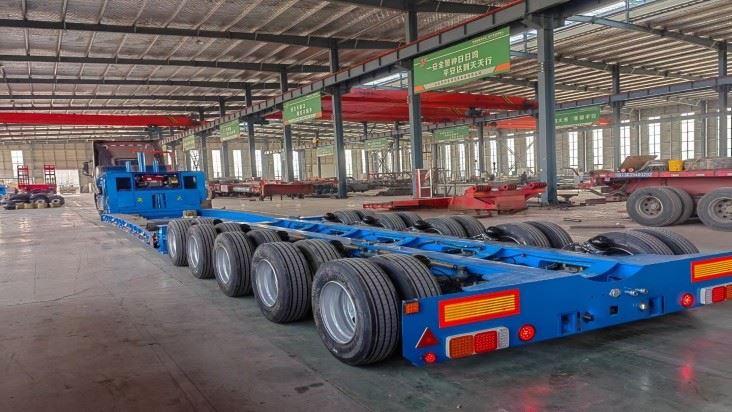
There are different types of suspension systems, such as leaf spring suspension and air suspension. International standards may specify the type of suspension system based on the trailer's intended use and load capacity. For example, air suspension is often preferred for transporting sensitive or high - value cargo as it provides better shock absorption and load distribution.
Braking System Standards
The braking system of a low bed semi trailer is a vital safety feature. International standards require that trailers be equipped with an effective braking system that can stop the trailer safely within a specified distance. The braking system should be able to handle the weight of the trailer and its cargo, as well as the forces generated during deceleration.
There are two main types of braking systems used in low bed semi trailers: hydraulic brakes and air brakes. Air brakes are more commonly used for larger trailers due to their greater stopping power and reliability. International standards specify the minimum braking force, the response time of the brakes, and the maintenance requirements for the braking system.
For example, the braking system should be able to bring the trailer to a complete stop within a certain distance when traveling at a specified speed. Regular inspections and maintenance of the braking system are also mandatory to ensure its proper functioning.
Lighting and Safety Equipment Standards
Low bed semi trailers must be equipped with proper lighting and safety equipment to ensure visibility and safety on the roads. International standards define the type, number, and placement of lights on the trailer. This includes headlights, taillights, brake lights, turn signals, and reflectors.
The lights should be bright enough to be visible in different weather conditions and at different distances. Reflectors are also important as they increase the trailer's visibility at night. Safety equipment such as emergency exits, fire extinguishers, and warning signs are also required by international standards.
For example, a 60 Ton Low Bed Trailer should have clearly marked emergency exits in case of an accident. Fire extinguishers should be easily accessible and in good working condition. Warning signs indicating the size and weight of the load should be placed on the trailer to alert other road users.
Compliance and Certification
To ensure that low bed semi trailers meet international standards, they need to go through a certification process. This process involves inspections by authorized testing agencies. These agencies check the trailer's design, construction, and performance against the relevant international standards.
Once a trailer passes the inspection, it is issued a certificate of compliance. This certificate is proof that the trailer meets all the necessary safety and quality requirements. It is also an important document for customers as it gives them confidence in the product they are purchasing.
As a supplier, we are committed to ensuring that all our low bed semi trailers meet or exceed international standards. We work closely with testing agencies to ensure that our products are thoroughly tested and certified. This not only helps us provide high - quality products to our customers but also ensures the safety of the transportation process.
Conclusion
International standards for low bed semi trailers are essential for ensuring the safety, reliability, and compliance of these specialized vehicles. From structural design to braking systems, lighting, and safety equipment, every aspect of the trailer is carefully regulated. As a supplier, we understand the importance of these standards and strive to produce trailers that meet the highest quality and safety requirements.
If you are in the market for a low bed semi trailer, whether it's a 4 Axle Low Bed Trailer, a 60 Ton Low Bed Trailer, or a 6 Axle Low Bed Semi Trailer, we invite you to contact us for more information and to discuss your specific needs. We are here to provide you with the best - quality trailers that meet all international standards.
References
- International Organization for Standardization (ISO) standards related to road vehicles and trailers.
- National and regional standards for road transportation and vehicle safety.


