


Can a dump trailer be used for hauling livestock feed? That's a question I get a lot as a dump trailer supplier. In this blog, I'm gonna break down whether dump trailers are a good fit for transporting livestock feed, the pros and cons, and some tips on making the most of them if you decide to go that route.
First off, let's talk about what a dump trailer is. A dump trailer is a type of trailer that can be tilted to unload its contents quickly. It's commonly used in construction, agriculture, and other industries for hauling materials like gravel, sand, and dirt. But can it handle livestock feed? The short answer is yes, it can.
One of the biggest advantages of using a dump trailer for hauling livestock feed is its efficiency. With a dump trailer, you can load up a large quantity of feed at once and then quickly unload it at the destination. This saves a lot of time compared to using other methods, like manual shoveling or using a conveyor belt. For example, if you have a large farm with multiple feeding areas, a dump trailer can get the feed to where it needs to be in no time.
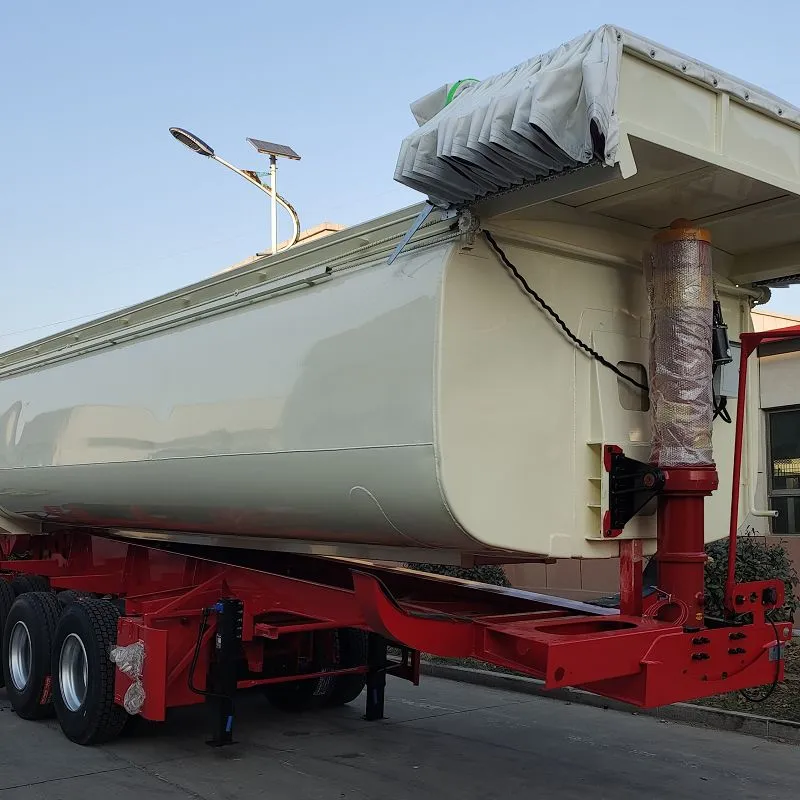
Another benefit is the capacity. Dump trailers come in various sizes and configurations, so you can choose one that suits your specific needs. Whether you need to haul a few tons or dozens of tons of feed, there's a dump trailer out there for you. For instance, our 3-Axis Red Semi-Trailer 50 Tons Of Cargo Transport can handle a substantial amount of livestock feed, making it ideal for large-scale operations.
Dump trailers are also relatively easy to operate. Most modern dump trailers are equipped with hydraulic systems that make tilting the trailer a breeze. You don't need a lot of specialized training to use one, which means you can get your employees up and running quickly. And if you run into any issues, there are usually plenty of resources available online or through the trailer manufacturer to help you troubleshoot.
However, there are also some drawbacks to using a dump trailer for hauling livestock feed. One of the main concerns is contamination. Since dump trailers are often used for hauling other materials like dirt and gravel, there's a risk of cross-contamination if the trailer isn't properly cleaned between loads. This can be a serious problem, as contaminated feed can lead to health issues for your livestock. To mitigate this risk, it's important to clean the trailer thoroughly after each use and use separate trailers for different types of materials if possible.
Another potential issue is the potential for damage to the feed. When the trailer is tilted to unload the feed, there's a chance that the feed could be crushed or damaged. This is especially true if the feed is in a loose or granular form. To minimize this risk, you can use a liner in the trailer or adjust the angle of the tilt to ensure a more gentle unloading process.
The cost is also a factor to consider. Dump trailers can be quite expensive, especially if you're looking for a high-capacity model. In addition to the initial purchase price, you'll also need to factor in the cost of maintenance, insurance, and fuel. However, if you're using the trailer frequently and it helps you save time and increase efficiency, the investment may be worth it in the long run.
Now, let's talk about some tips for using a dump trailer to haul livestock feed. First and foremost, make sure you choose the right trailer for your needs. Consider the capacity, the type of feed you'll be hauling, and the terrain you'll be driving on. For example, if you'll be driving on rough or uneven terrain, you may want to choose a trailer with a more robust suspension system.
It's also important to load the feed properly. Make sure the feed is evenly distributed in the trailer to prevent it from shifting during transport. This can help reduce the risk of damage to the feed and the trailer. And when you're unloading the feed, be careful not to overfill the feeding area.
Regular maintenance is crucial to keep your dump trailer in good working condition. Check the hydraulic system, the brakes, and the tires regularly to make sure everything is functioning properly. And don't forget to clean the trailer after each use to prevent contamination.
In conclusion, a dump trailer can be a great option for hauling livestock feed, but it's not without its challenges. If you're willing to take the necessary precautions to prevent contamination and damage to the feed, and you can afford the cost, a dump trailer can help you streamline your feeding operations and save time and money in the long run.
If you're interested in learning more about our dump trailers or have any questions about using them for hauling livestock feed, don't hesitate to reach out. We're here to help you find the right solution for your needs. Whether you're a small family farm or a large commercial operation, we have a dump trailer that can meet your requirements. So, if you're ready to take your livestock feeding to the next level, let's start a conversation and see how we can work together.
References

- General knowledge about dump trailers and livestock feed hauling in the agriculture industry.


