


If you’re in the market for heavy-duty used equipment for construction, mining, or infrastructure projects, a Howo dump truck stands out as a reliable workhorse—especially for operations that demand durability in tough, high-stakes environments. As a supplier specializing in pre-owned heavy trucks, I’ve learned that the drive shaft is one of the most critical components to inspect when vetting any used Howo dump truck, because it transfers torque from the transmission to the rear axles, a job that sees constant stress from heavy loads, uneven terrain, and daily wear. Many first-time buyers overlook this part’s condition, leading to unexpected breakdowns, costly repairs, and downtime that can derail project timelines. That’s why I’ve outlined what to look for when evaluating a used Howo dump truck’s drive shaft, based on years of hands-on inspections and experience with trucks that go on to serve routes across regions with extreme operating conditions.
To start, it’s important to understand how Howo’s original drive shafts are engineered. Howo, a brand under Sinotruk, designs its drive shafts for heavy hauling: typically made of high-tensile steel, with universal joints (U-joints) that accommodate the movement between the transmission and axles as the truck’s suspension flexes over rocks, potholes, or uneven construction sites. For used units, the biggest red flags aren’t just obvious damage—like dents or bends—but wear that signals the truck has been pushed beyond its intended limits, which is common in operations in rugged areas.
One of the first checks I do is visual inspection of the drive shaft’s surface. Dents or minor bends might seem trivial, but even a small indentation can create an imbalance at high speeds, leading to vibration that wears out U-joints and axle bearings faster. I once saw a 2018 Howo 6x4 dump truck that had a 2-inch dent in its drive shaft; the previous owner had hauled oversized construction debris without securing it, and the load shifted, striking the shaft. By the time the truck arrived at my lot, the vibration had already worn out both rear U-joints, a repair that would have cost over $1,200. This is why I always advise buyers to look past surface-level cosmetics and check for any permanent deformation. For context, 6x4 trucks—including most Howo dump trucks—have two rear axles, so their drive shafts often connect the transmission to a center differential, then another shaft to the rear axle; this two-piece setup adds more points where misalignment or wear can occur, making inspection even more important. If you’re shopping specifically for this configuration, our selection of [Used 6x4 Dump Trucks] includes dozens of Howo models that have been fully inspected for shaft condition, so you can filter for options that match your load requirements.

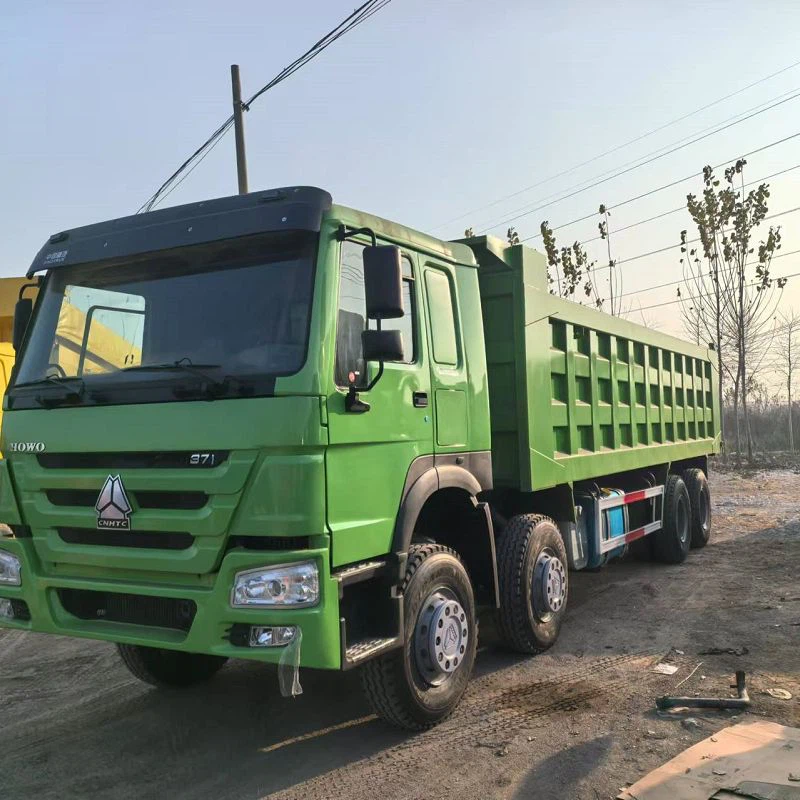
Next, I test for U-joint play, a key sign of wear. U-joints are the pivot points that allow the drive shaft to move as the truck travels over uneven ground, and they rely on sealed bearings to reduce friction. Over time, seals can crack or wear out, letting dirt, dust, and moisture seep in—this is especially true for trucks operating in dusty, muddy regions, which is a common use case for units sent to Africa. To check play, I grab each end of the drive shaft and wiggle it back and forth; if there’s more than a quarter-inch of movement at either U-joint, that’s a sign the bearings are worn and need replacement. Another test is to start the truck in neutral, then gently rotate the drive shaft by hand to feel for rough spots or grinding—grinding indicates worn bearings or contaminated lubricant. I once worked with a Howo dump truck headed for a mining site in West Africa; when I checked its U-joints, I found caked-on mud and sand inside the seals, which had caused the bearings to seize slightly. Replacing those U-joints before delivery saved the buyer from a $1,500 repair once the truck reached its remote worksite. If you’re targeting operations in Africa, our [Used Dump Truck for Africa] inventory includes Howo models that have been deep-cleaned and prepped for dusty, variable terrains, with drive shaft U-joints inspected and serviced as needed.
Misalignment is another common issue with used Howo drive shafts, and it’s often a result of accident damage, improper loading, or worn suspension components. A slightly misaligned drive shaft can cause a consistent vibration at speeds above 40 mph, which not only is uncomfortable for drivers but also accelerates wear on other parts, like transmission mounts and axle seals. To check alignment, I use a dial indicator to measure the runout (how much the shaft deviates from a straight line) as it rotates. For Howo drive shafts, runout should be less than 0.05 inches; anything above that means the shaft is either bent, the suspension is out of alignment, or the axle is not properly seated. I once had a buyer who purchased a Howo dump truck without checking alignment; within a month, the vibration had cracked the transmission’s input shaft, requiring a full transmission rebuild that cost more than the truck’s initial price difference from a properly inspected unit. This is why I always recommend checking alignment, especially for trucks that have a history of being in minor collisions, or that have hauled extremely heavy loads (like over 40 tons of rock, the upper limit for most Howo dump trucks).
Lubrication is a often overlooked factor when assessing drive shaft condition. Howo’s original drive shafts require specific high-pressure, extreme-pressure (EP) lubricant for their U-joints, and they have grease fittings that should be regularly greased to prevent wear. Many used trucks, especially those in remote operations, skip routine lubrication, leading to dry, corroded U-joints that seize up. I always check the grease fittings on the drive shaft: if they’re stripped, rusted, or missing, that means the previous owner neglected maintenance, so you’ll need to replace the fittings and grease the U-joints immediately after purchase. If the U-joints have no grease at all, that’s a clear red flag—even if there’s minimal play now, they’ll fail quickly without proper lubrication. On the flip side, I look favorably on trucks where the grease fittings are intact and show signs of recent greasing; those are usually from owners who kept up with basic maintenance, which translates to a better drive shaft (and better overall truck condition).
It’s also important to note that Howo’s drive shafts are designed to last for around 150,000 to 200,000 miles with proper maintenance, but that timeline can be cut in half if the truck is used for heavy hauling in harsh conditions. When evaluating a used Howo dump truck, ask for the truck’s service records if available—if the owner has documentation of regular U-joint replacement and drive shaft alignment checks, that’s a much better buy than a truck with no service history. I always tell buyers that a used Howo with a well-documented maintenance history is a safer bet than a cheaper truck with unknown wear, because the drive shaft is a part that’s expensive to replace if it fails unexpectedly. For those new to purchasing used heavy trucks, it’s also helpful to work with a supplier who conducts full, third-party inspections of every truck they sell; as a Howo dump truck supplier, I personally inspect each unit’s drive shaft (and all other critical components, like brakes, suspension, and engines) before listing it, so you can trust the condition of the truck you’re considering.
Now, let’s tie this back to how drive shaft condition impacts your purchase decision. If you’re comparing a cheaper Howo dump truck with a worn drive shaft and a more expensive one with a well-maintained drive shaft, the latter will almost always save you money in the long run. A worn drive shaft might need $1,000 to $2,500 in repairs to get it road-ready, plus the cost of downtime while the truck is out of service; in remote locations, that downtime can delay projects and lead to lost revenue. By contrast, a truck with a properly functioning drive shaft will have fewer breakdowns, lower maintenance costs, and a longer lifespan. If you’re exploring options, our [Used Howo Dump Truck] inventory includes a range of models from 2015 to 2022, all with fully inspected drive shafts and other key components, so you can find a unit that fits your budget and project needs.
Finally, to make sure you’re making the right choice, avoid common pitfalls: never buy a used Howo dump truck without a hands-on inspection of the drive shaft, never rely solely on photos or online listings, and always factor in the cost of any necessary repairs. For operations in Africa, where terrain is often rugged and maintenance resources can be limited, a truck with a strong drive shaft is even more critical—it will handle repeated trips over unpaved roads and heavy loads without failing. Our team works with buyers to ensure every truck we sell is ready for these conditions, with drive shafts that are serviced and inspected to withstand the stress of daily heavy hauling.
If you’re ready to browse our inventory of used Howo dump trucks, including 6x4 models and units prepped for African operations, or if you have questions about drive shaft condition or any other component, our team is here to help with procurement and inspection consultations. Reach out to connect for more details on available units and to discuss your specific truck needs.
References:
- Sinotruk Howo Dump Truck Technical Maintenance Manual (2021)
- Heavy-Duty Drive Shaft Inspection Guidelines, National Association of Heavy Equipment Services (2020)
- African Construction Equipment Market Report: Used Truck Performance Standards, African Infrastructure Development Fund (2022)
- U-Joint Wear and Failure Analysis, Society of Automotive Engineers (SAE International, 2019)


